Education on Disinformation
For this blog post, I looked at two different disinformation education-related websites. Rumor Guard and Breaking Harmony Square. These two websites aim to provide resources and information to help viewers learn and better understand disinformation techniques people and organizations use across the internet, especially on social media.
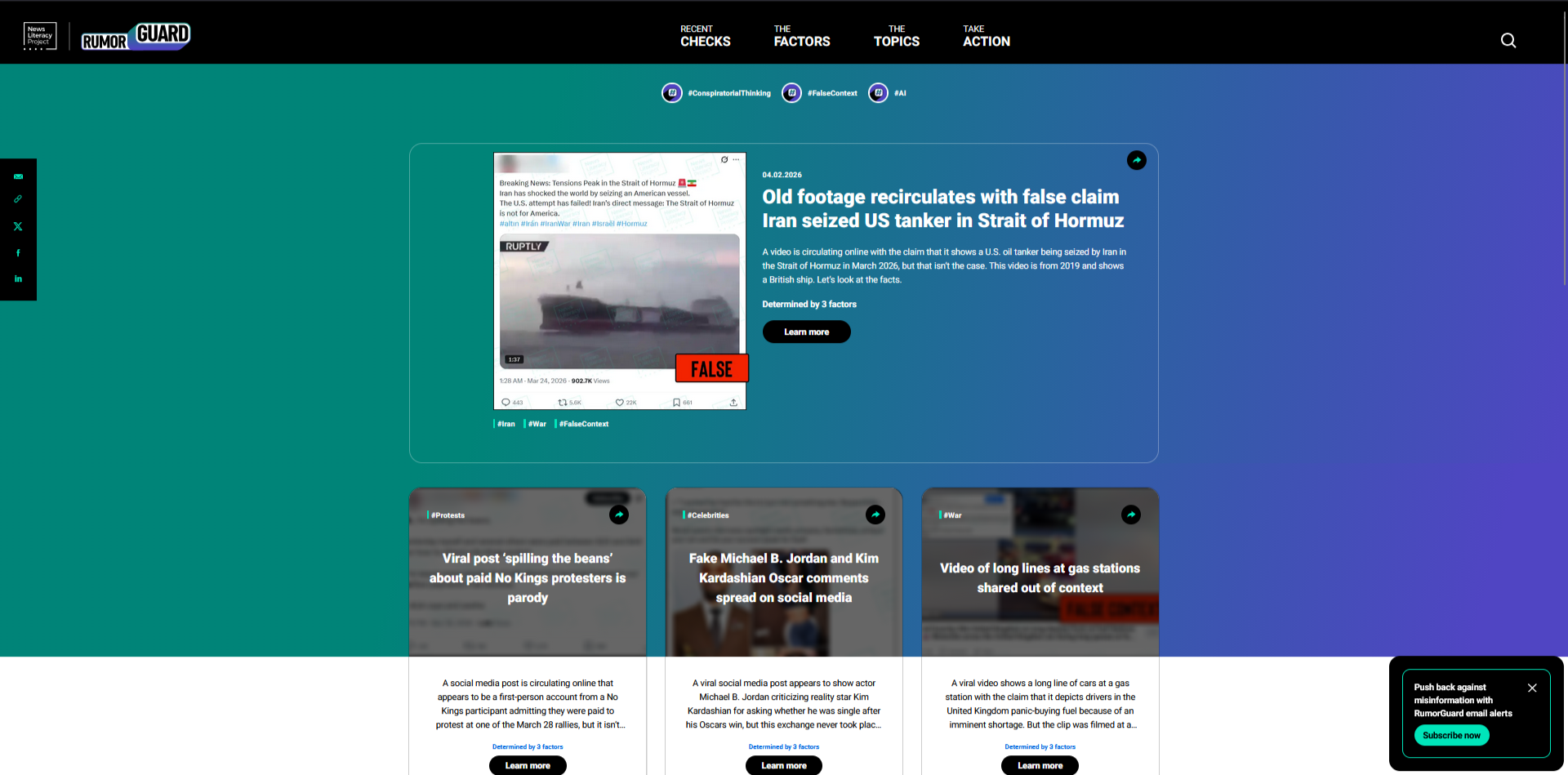
The first website I looked over was the News Literacy Project’s “Rumor Guard.” This website provides educational resources and additional information on how to spot and assess misinformation from around social media and the internet as a whole. Its main feature is presenting news and social media posts that seem real and provides context and additional information on how it is fake.
It does this using “The 5 Factors” of authenticity, source, evidence, context, and reasoning. With these five checks on any post or news article, Rumor Guard shows how and why it is fake. It also teaches the viewer how to use these checks and what to look out for when scrolling through social media. Specifically, in the post provided in the screenshots below, for each factor, it provides a small explanation on why the post “failed” the check. Rumor Guard also provides links back to its parent organization with help guides and tools further informing the viewer on the things organizations and people use to spread mis and disinformation online.
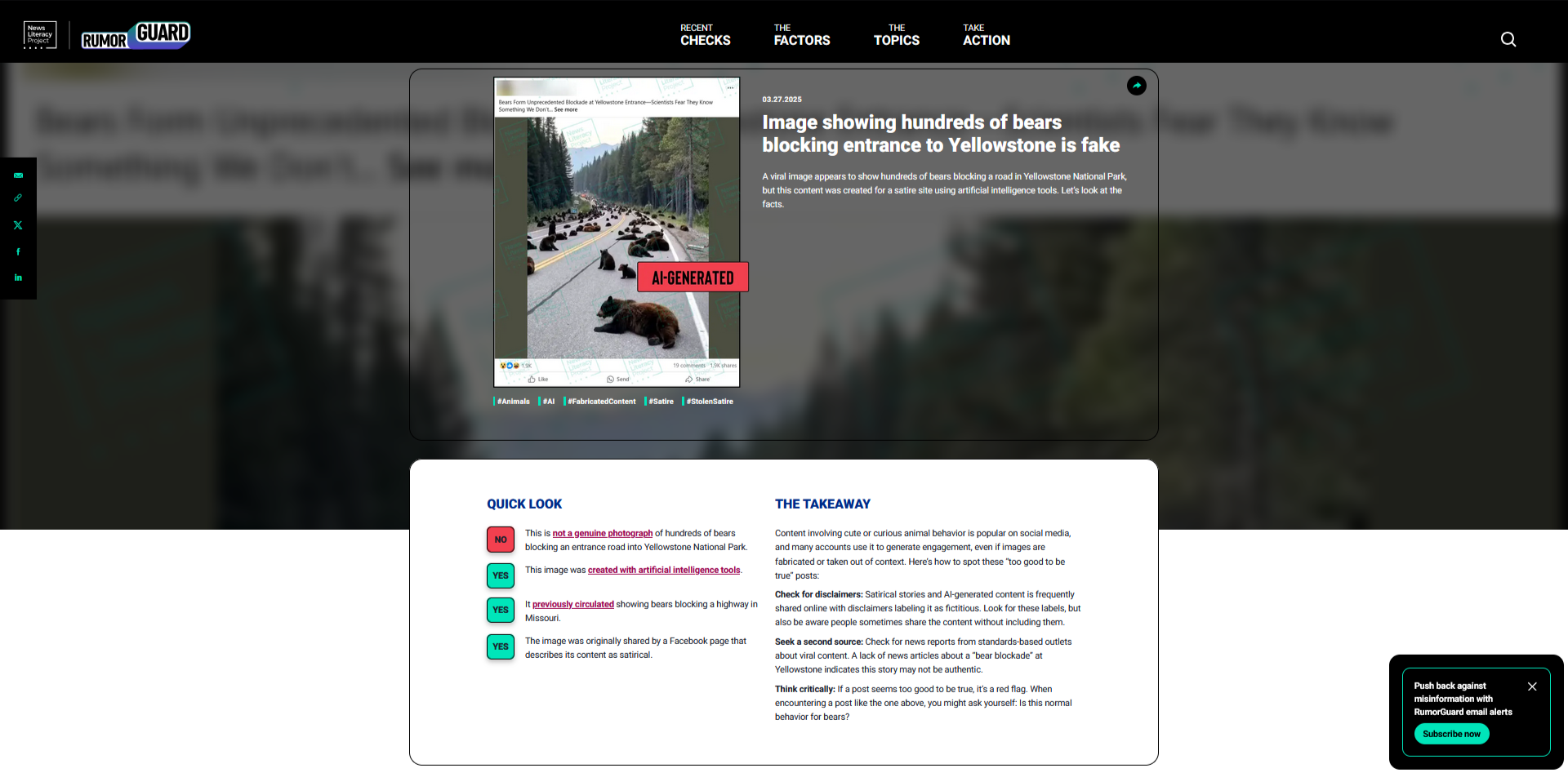
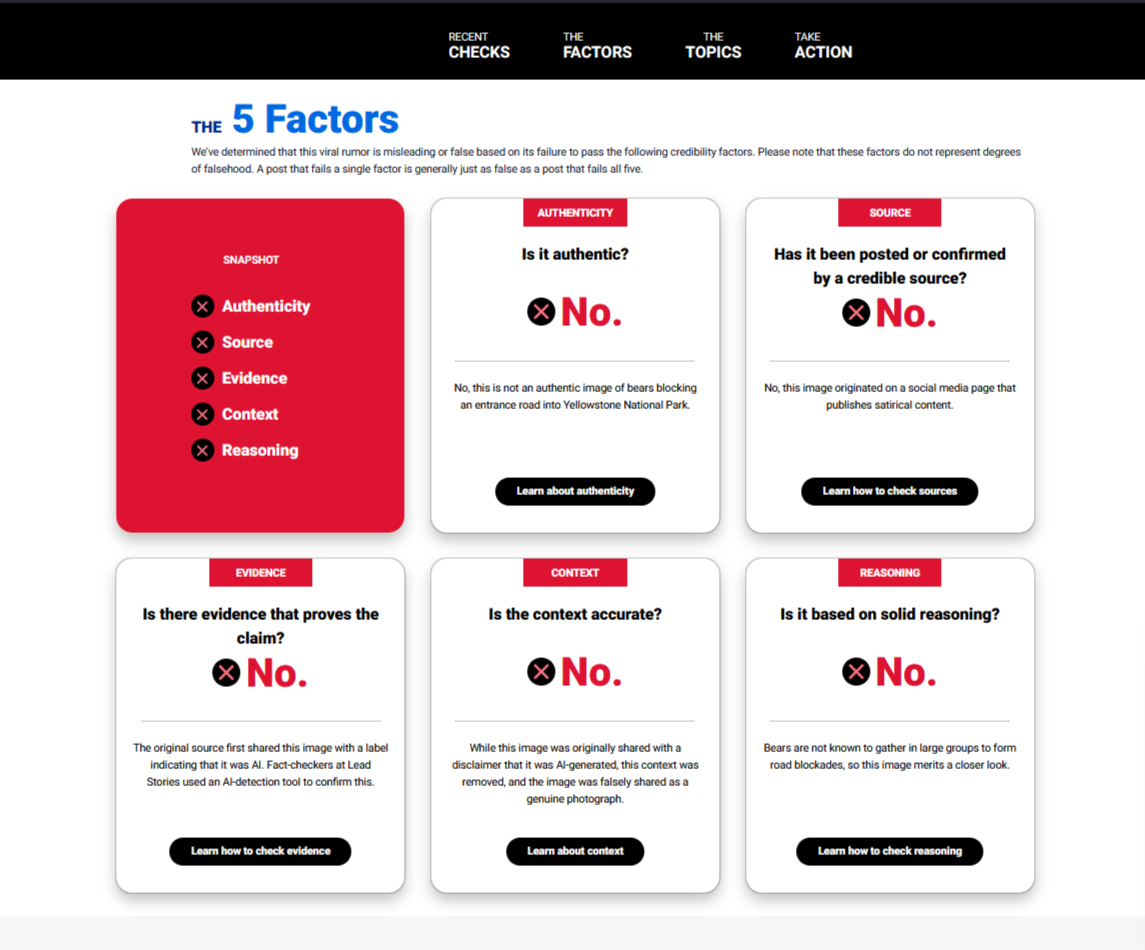
I really like this website as it provides a simple way to see and learn about the ways information is both fabricated and exaggerated in order to further a specific viewpoint or cause people to think a certain way. While it does not seem to be as fast or up to date as other services like Snopes.com, it certainly provides a much-needed educational aspect that others sometimes lack in their services, since it can often feel like fact-checking is tedious or hard work only professionals can do.
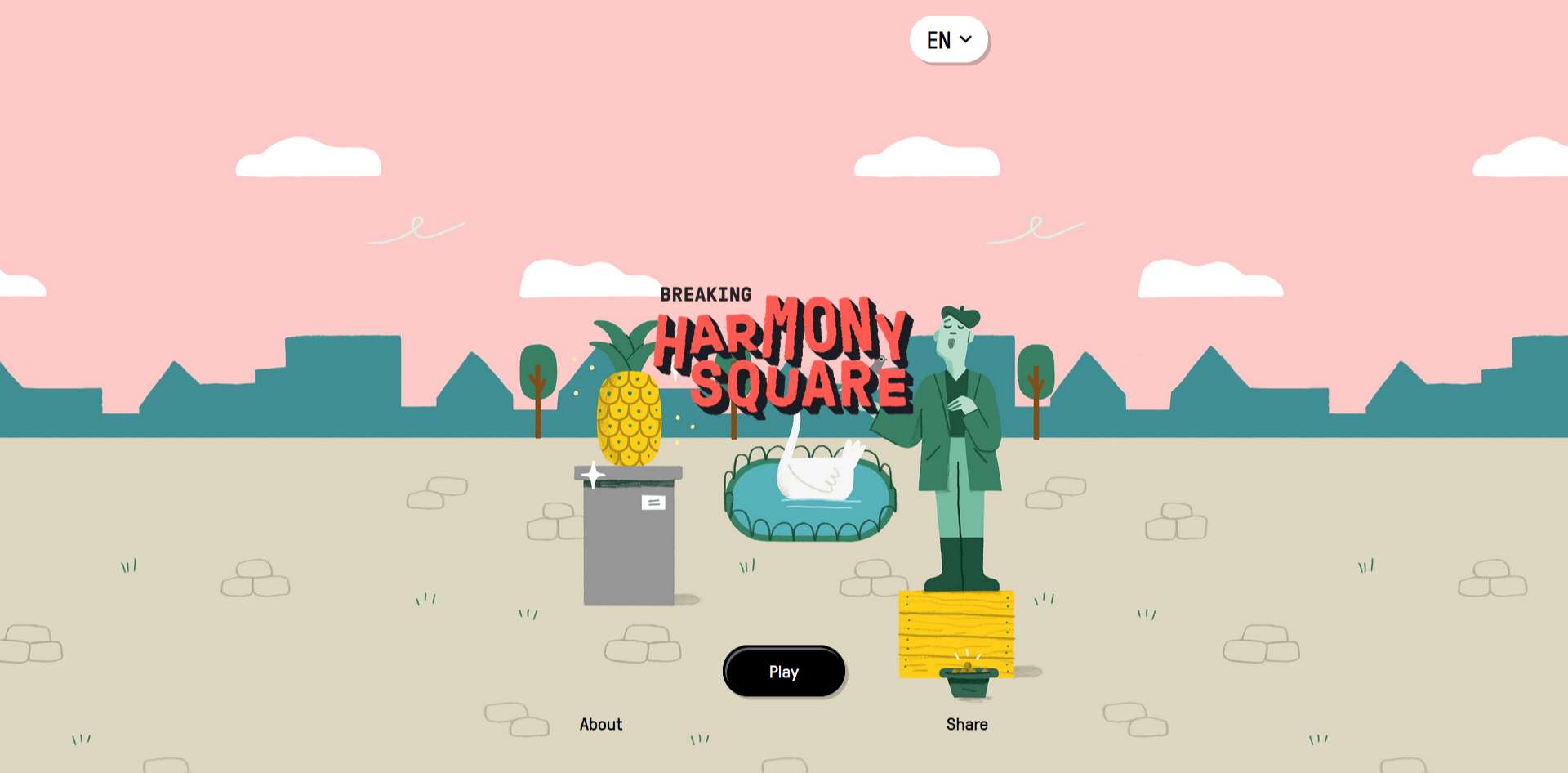
For the second item I looked over, I played “Breaking Harmony Square.” This game sets you to play as a new Chief Disinformation Officer set to cause chaos in the town of Harmony Square. Throughout the game, you are presented with four scenarios in which you are tasked to use various mis and disinformation techniques to polarize the citizens of Harmony Square. Two of the techniques I found especially interesting to use were the use of bots in social media as well as the use of strong emotional and threatening language in social media posts.
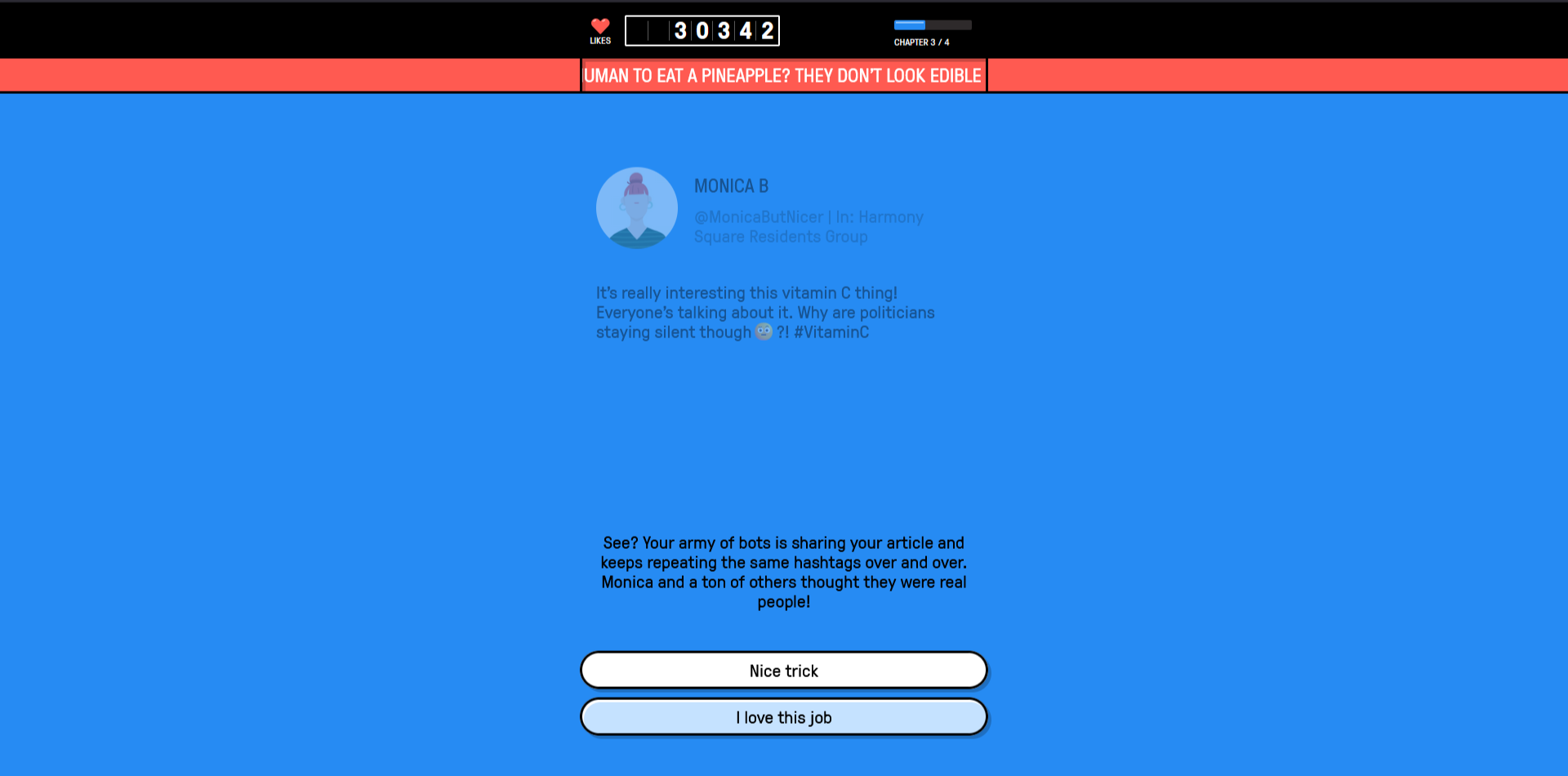
Using bots has become a popular and very damaging technique that organizations use to help spread and control information. This infographic by the Cybersecurity and Infrastructure Security Agency presents how bots are used to help the spread of disinformation, and some of these techniques are exactly the ones used in the game.
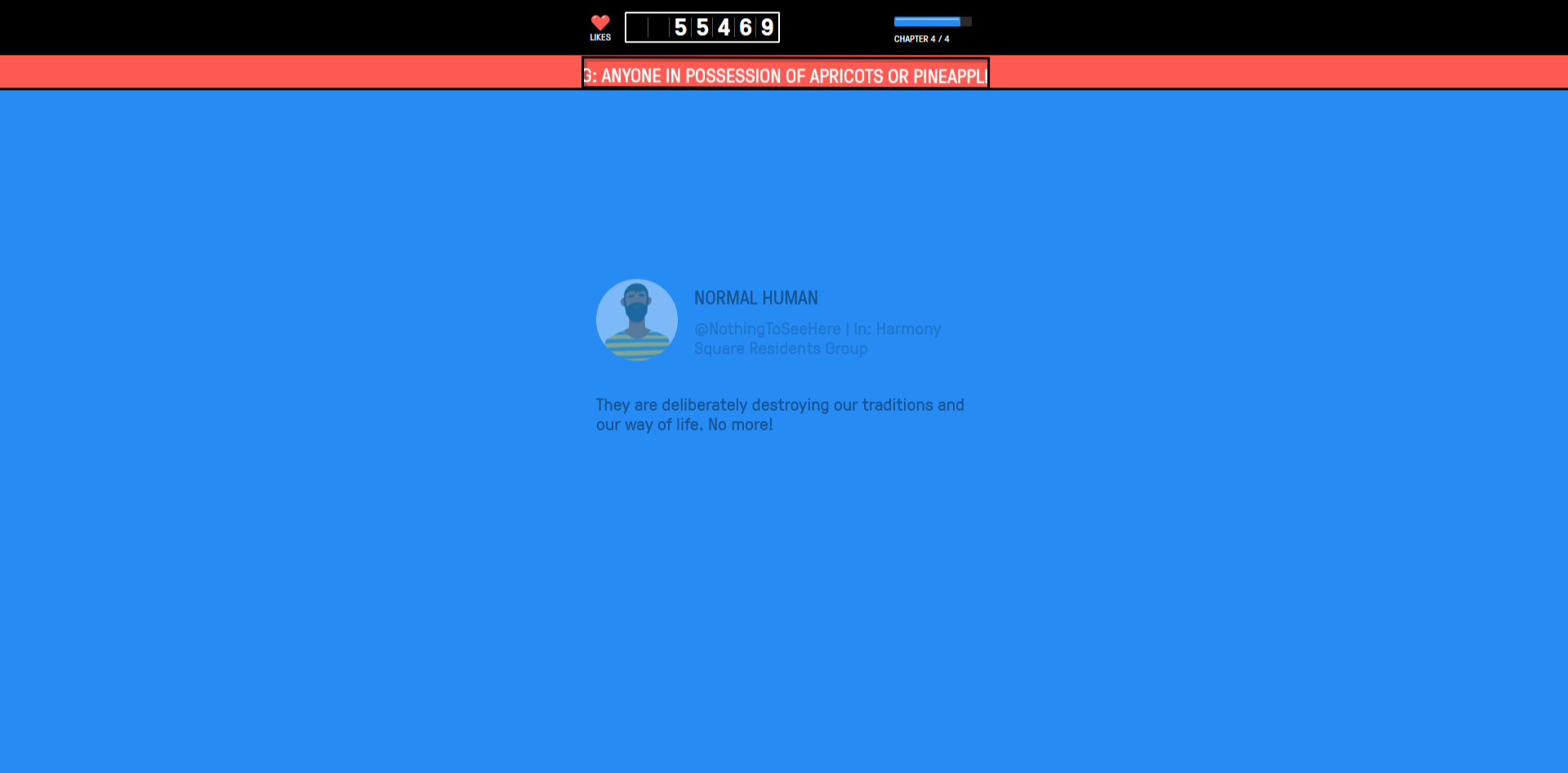
The use of polarizing language, like in the picture above, from the game has become very common among all kinds of organizations and personalities recently. From political voices to random citizens, people have taken issues to the extreme and used them as excuses or examples of how they are threatened every day by any specific or general group of people they are angry at.
All in all, the game was a very interesting look at what misinformation could look like in the world of social media. If left unchecked, and if people let it get to them emotionally, campaigns like these can cause once simple and strong communities to crack and be split against each other.